
When a car breaks down, most people focus on the repair itself. Few stop to think about what makes that repair possible in the first place. Behind every vehicle that gets back on the road quickly is a time‑critical logistics operation working quietly in the background – ensuring the right spare part arrives exactly when it’s needed.
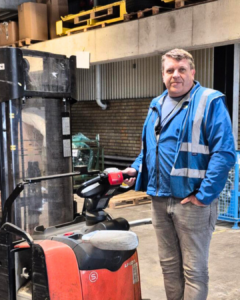
This is the reality of working in automotive logistics.
The automotive industry depends on thousands of different spare parts and when even a single component is missing, vehicles can be grounded for days. That might mean a family struggling to get to work, a delivery driver unable to complete routes, or a bus failing to run on time. Time‑critical spare parts logistics plays a vital role in keeping people mobile and everyday life running smoothly.
The responsibility behind the decisions
For those working in this field, the responsibility is very real. Time-critical spare part logistics is not simply about moving goods from A to B — it’s about making the right decision at the right moment when something goes wrong. With thousands of spare parts in circulation, timing becomes critical, and even short delays can have a huge impact.
This is something Michael Hansen, Terminal & Loadmaster Manager, knows well: “You always know that a delay means more than just waiting,” he says. “If a part doesn’t arrive, a repair stops and leads to frustrations among the people waiting for their car to be fixed. That’s why timely delivery is so important – and you constantly have to balance speed and precision under pressure.”
Decisions are often made quickly, with limited room for error. It’s work that demands focus, adaptability, and a strong sense of ownership – because the outcome depends on getting those decisions right.
Understanding the complexity of logistics
There are many misconceptions about what logistics actually involves. From the outside, it can look like simple transport or warehouse work. What’s less visible is the coordination required to make sure the right part is available exactly when it’s needed, especially within the field of time-critical spare parts.
“People often underestimate how complex it really is. You’re dealing with thousands of different parts, and you need to predict demand, manage compliance like dangerous goods, and keep full visibility across the network – all at the same time” Michael Hansen explains.
The complexity isn’t always obvious but it’s about constantly keeping an overview, adjusting plans, and making sure everything comes together as they should.
When the impact becomes clear
Sometimes, the meaning of the work becomes very clear. One missing part can take a vehicle out of operation – and without the right spare part, it can quickly turn into days of disruption. But when everything comes together, a part can be delivered within hours – allowing people to get back on the road and everyday life to continue. From a customer perspective, this is just as clear. Robin Sjöstrand, Logistics Manager at Hedin Parts and Logistics chimes in:
“When dealing with automotive spare parts, transport plays a key role in getting vehicles back on the road. A missing spare part doesn’t just delay a repair – it can mean that someone can’t get to work, your dishwasher can’t be delivered because the delivery van is stuck in the shop, a family must change their holiday plans. Fast and reliable deliveries are essential to keeping society moving. Preventing such situations depends on close coordination behind the scenes and on people making the right decisions at the right time, so everyday mobility keeps running smoothly.”
And as Michael Hansen puts it:
“Knowing that my work helps keep people mobile – whether it’s a family getting to work or a business being able to operate – gives me a sense of purpose beyond numbers,” he says. “Every delivery on time helps keep things moving, and that’s something I’m genuinely proud of.”
Learn more about working in time-critical spare parts logistics by following this link.